PRESS RELEASE
Philippine Embassy, Canberra
1 Moonah Place, Yarralumla, ACT 2600
www.philembassy.org.au *Tel. No. 02-6273-2535*
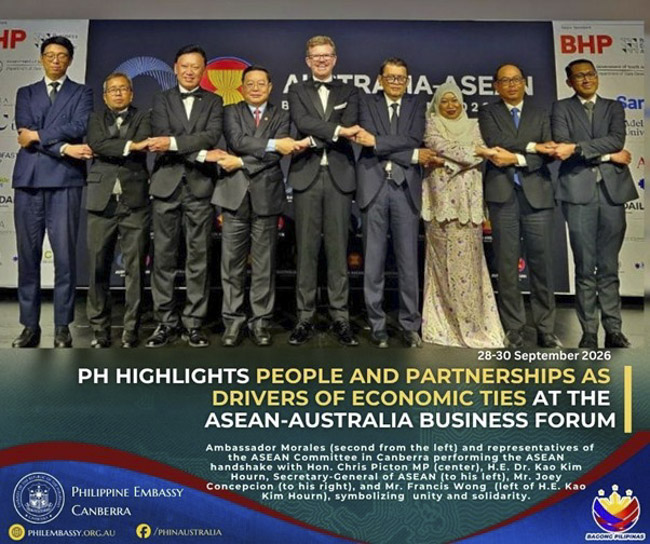
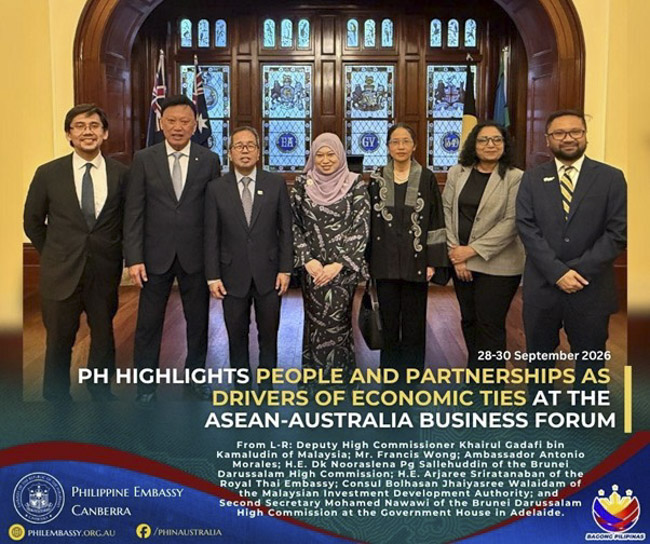
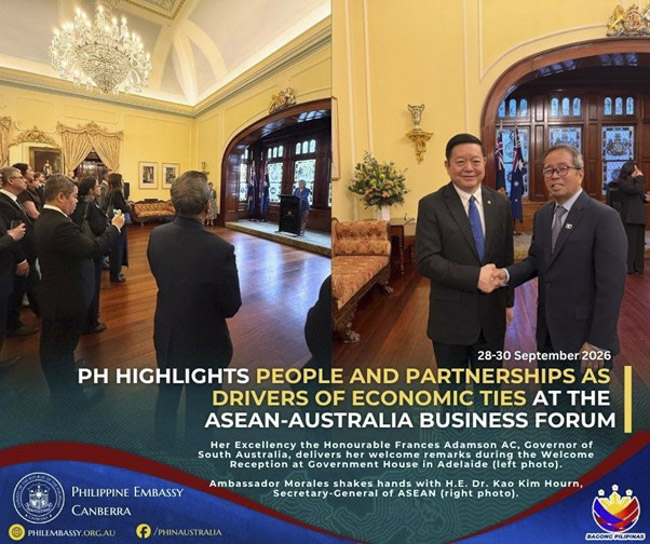
28-30 September 2026, ADELAIDE — The Philippines highlighted the importance of skills development, workforce mobility, and stronger business and people-to-people connections in deepening economic ties with Australia and ASEAN at the Australia–ASEAN Business Forum in Adelaide. Held under the theme “Deepening Australia–ASEAN Economic Integration in a Changing Global Landscape,” the forum brought together government officials, academics, ASEAN leaders, industry executives, investors, and policymakers to discuss opportunities in energy transition and green technology, digital transformation and artificial intelligence, agrifood and food security, infrastructure and sustainable development, and human capital and skills development.
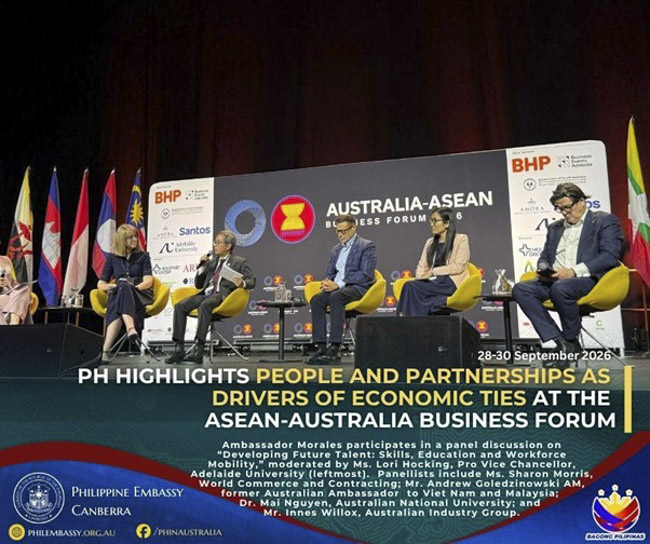
Philippine Ambassador to Australia Antonio A. Morales participated in the panel discussion, “Developing Future Talent: Skills, Education and Workforce Mobility,” moderated by Ms. Lori Hocking, Pro Vice Chancellor for Global Partnerships at Adelaide University.
Ambassador Morales shared the Philippine experience in workforce development, emphasizing the need to upskill workers and align education and training with evolving industry requirements through closer cooperation among governments, educational institutions, and industry. He also underscored the importance of skills recognition and the recognition of educational qualifications in facilitating workforce mobility and helping workers apply their competencies across borders.
He noted that international mobility can provide Filipino workers with broader career opportunities, potentially higher earnings, and exposure to new skills and technologies. At the same time, he highlighted the importance of maintaining an adequate supply of skilled and productive workers in the Philippines while maximizing the benefits of international mobility. He stressed that orderly and well-managed migration systems are essential to protecting migrant workers and enabling both origin and destination countries to benefit from workforce mobility.
Ambassador Morales also noted the role of ASEAN frameworks in facilitating the mobility of professionals and skilled workers in the region, including through mutual recognition arrangements for selected professions. These initiatives underscore the importance of regional cooperation in skills recognition, education and training, and the development of a workforce equipped to respond to evolving industry needs.
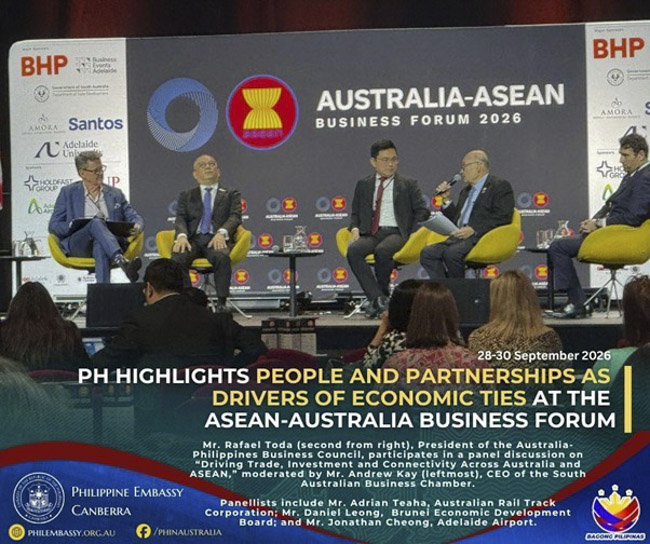
Mr. Rafael Toda, President of the Australia-Philippines Business Council, participated in the panel discussion, “Driving Trade, Investment and Connectivity Across Australia and ASEAN.” He highlighted gaps in mutual understanding between Australia and ASEAN, emphasizing that cultural fluency, awareness, and genuine engagement are important to building meaningful, long-term business relationships. Stronger personal connections and a deeper understanding of regional markets, he noted, can help translate shared economic interests into concrete business partnerships and investment opportunities.
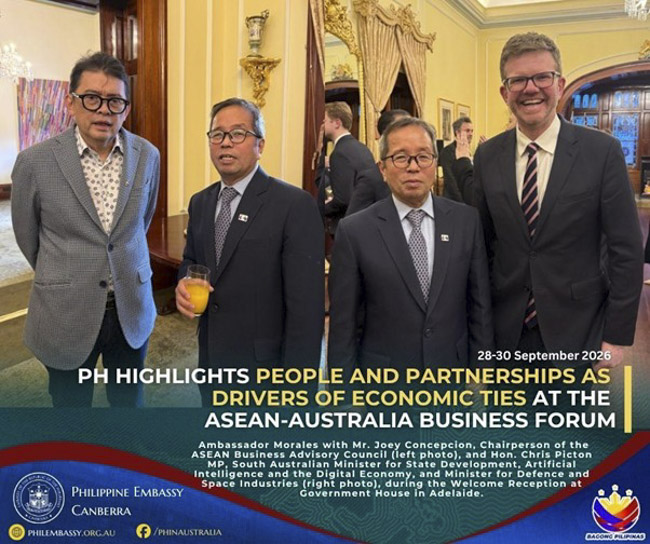
Mr. Joey Concepcion, Chairman of the ASEAN Business Advisory Council–Philippines, delivered remarks on “The Future of the Australia–ASEAN Economic Partnership in a Changing Global Landscape” and closing remarks at the Gala Reception. He emphasized the importance of sustained private-sector partnerships in expanding economic opportunities and promoting inclusive growth across the region. He also invited participants to attend the ASEAN Business and Investment Summit in Manila on 14–15 November 2026, providing another opportunity for business leaders and stakeholders to strengthen partnerships and explore avenues for regional economic cooperation.
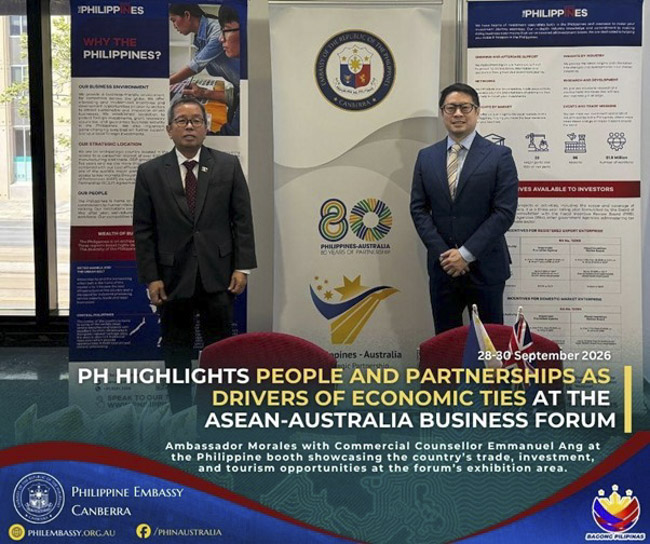
The Philippines also maintained a booth in the forum’s exhibition area showcasing the country’s trade and investment opportunities and tourism destinations. Mr. Emmanuel Ang, Commercial Counsellor of the Philippine Trade and Investment Center, and Philippine Honorary Consul in Adelaide Carmen Garcia also participated in the forum, supporting efforts to promote the Philippines as a destination for trade, investment, and tourism.
The Philippines’ participation is part of its continued efforts to deepen economic ties with Australia and ASEAN by strengthening connections among people, businesses, and institutions. Through cooperation in education, skills development, workforce mobility, trade, and investment, the Philippines seeks to contribute to a more connected and inclusive regional economy. END